Education

Asia Theological Association head discusses contextual education, partnership with churches and biblical grounding amid changing times

Asia Theological Association head discusses contextual education, partnership with churches and biblical grounding amid changing times

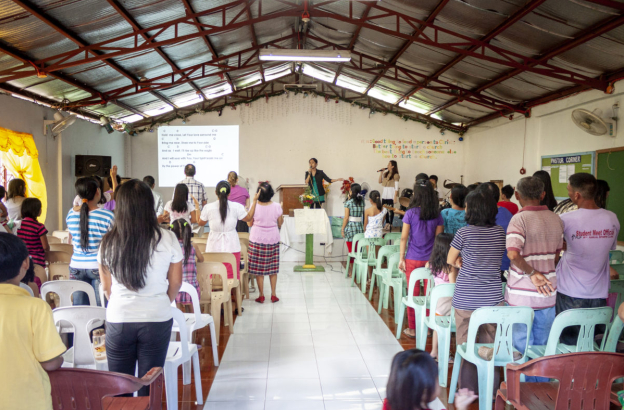
Theological education in Asia is gaining strength as local institutions increasingly take ownership of training future leaders, according to Dr. Theresa Lua, general secretary of the Asia Theological Association (ATA). Lua spoke to Christian Daily International about Asian educators' efforts to contextualize curriculum, strengthen church partnerships, adapt to online learning and maintain biblical grounding in an evolving world.


Opinion

  • When it comes to Christian leader training, measurement must not replace formation

    Pastors in small churches in India and around the world may lack formal theological education but responsibility shapes them, failure shapes them, suffering shapes them, prayer shapes them. Sometimes persecution shapes them. Character formation while walking faithfully with Jesus, guided by the Bible and trustworthy mentors, cannot be replicated by a program, and does not result in a diploma, but it is highly valuable education nonetheless.

  • A special tribute to Jewish Christian missiologist Martin Goldsmith

    A tribute to Martin Goldsmith, a Jewish Christian who with his wife Elizabeth spent ten years as missionaries in South East Asia and were involved from the start with All Nations Christian College. A fluent Russian speaker, and educated in both Russian political thought and theology, Martin pioneered missiology and non-Western theology at All Nations Christian College. His influence spread far internationally.

  • How Christian universities crash and burn

    The reason for the decline of biblically faithful Protestant educational institutions is not difficult to track. Denying the authority of scripture and historically orthodox Christian beliefs are key factors. Presidents who allow faculty leaders to recruit theologically liberal or unbelieving staff undermine the central mission of the institution, rebel against the founding principles, and are answerable for the decline that typically follows. However, it becomes clear in this opinion that it is

Latest

Most Recent